VIBGYOR Group of Schools is expanding its presence in Mumbai with the launch of a new VIBGYOR Roots & Rise school in Gorai, Borivali West. Strategically located at L.T. Road, near Adani Power Substation, Gorai 3, the new campus has been thoughtfully designed to offer a nurturing, engaging and secure environment for early learners.
With a strong emphasis on holistic development, the new school reflects VIBGYOR’s commitment to delivering quality early education in a space where children can explore, grow and thrive.
Holistic Early Learning at Its Best
Education at VIBGYOR Roots & Rise is anchored in developmentally appropriate practices and a research-based curriculum that supports foundational learning across all domains – cognitive, physical, emotional and social. The programme includes a rich mix of structured learning and creative exploration, empowering young minds with essential life skills like communication, critical thinking and collaboration.
Students will also have access to best-in-class training in a diverse range of athletic and artistic disciplines. From skating, football, basketball and judo to music, dance, speech and drama, the curriculum encourages children to discover and pursue their interests from an early age.
Key Highlights of the Gorai Campus
Comprehensive Curriculum A balanced programme designed to spark curiosity and instil lifelong learning habits through age-appropriate and experiential activities.
Experienced Educators A team of qualified, passionate teachers committed to creating a warm and engaging learning environment.
Safe & Inspiring Campus Child-friendly infrastructure with well-lit classrooms, secure outdoor play zones, and rigorous safety protocols including CCTV surveillance, trained security staff, and attentive support personnel.
Collaborative Parent Engagement Open communication channels and regular updates ensure that each child’s learning journey is consistently supported at home and school.
A Word from the Leadership
Speaking on the exciting new development, Kavita Kerawalla, Vice Chairperson, VIBGYOR Group of Schools, said, “VIBGYOR Group of Schools was built to give our future leaders an environment to grow and thrive intellectually, artistically, athletically, and morally. With our presence now in Gorai, we will be able to provide quality education to more children in a safe and secure environment that helps ignite a diverse range of passions and interests, thereby preparing them for a demanding new world.”
Recognised for Educational Excellence
With a legacy of over two decades in delivering exceptional K–12 education, VIBGYOR continues to receive national recognition for its innovation and impact. Recent accolades include:
Outstanding School Group in Tech Practices – ET Excellence Awards 2025
Excellence in Sports & Physical Education Initiatives – TechEDU India Summit and Awards 2025
Founded in 2004, the VIBGYOR Group of Schools has consistently raised the bar in education across India, with a network of 40 schools in 15 cities serving over 50,000 students. Under the leadership of Mr. Rustom Kerawalla, Founder Chairman, the group is focused on nurturing excellence in academics, co-curricular activities, and character development through its distinctive approach to learning.
Admissions for Academic Year 2026-27 are now officially open.
To discover how your child can begin their journey at VIBGYOR Roots & Rise, Gorai, contact us Monday to Saturday, between 9:00 am and 5:00 pm, at +91 600 3000 700.
Help your little ones view every assignment as an opportunity to grow, reflect, and take pride in their efforts.
In this article, you’ll find: ✅ The homework paradox ✅ The new homework hour: A mirror into modern parenting ✅ Building a safe homework zone ✅ Parent support, not parental control ✅ The global homework debate ✅ Homework and family dynamics ✅ Focus without frustration ✅ Managing stress without losing connection ✅ Collaboration over competition ✅ Strengthening the circle of support
“Mom, I can’t do this.”
“You can. Let’s look at it together.”
Think back to your own childhood. Remember those evenings spent figuring out equations or essays under your parents’ watchful eyes? The frustration, the sighs, the small triumphs? Homework has evolved, from pen-and-paper to projects and digital learning, but one thing remains constant: the need for support. Today, helping kids with homework is about creating a space where they feel safe to try or to make mistakes. Supporting them through this process often reveals more about their strengths than any grade ever could.
The homework paradox
Across India, homework time often becomes a daily balancing act. Parents want to help but usually find themselves torn between encouragement and expectations.
In India, however, long assignments, tuition routines, and limited downtime create a culture of fatigue. Yet, small changes at home can redefine this experience. Effective study habits begin right at the dining table – by listening, pacing, and softening the tone.
A scene that plays out everywhere
Homework time can feel familiar – lessons waiting, parents guiding, and children hesitating. Between corrections and encouragement, emotions run high. A little patience, a listening ear, and the right approach transforms tension into teamwork.
This is where homework strategies and parent homework support make a difference.
The new homework hour: A mirror into modern parenting
In many cities, 7 p.m. to 9 p.m. has unofficially become “homework prime time.” Parents close their laptops, children unpack their books, and fatigue sits between them disguised as focus. What was meant to build confidence often ends up being a test of patience.
So what is the new rule: less correction, more connection
Because children remember how homework felt, not just what it contained. Gentle guidance helps in supporting student learning and building good study habits.
Building a safe homework zone
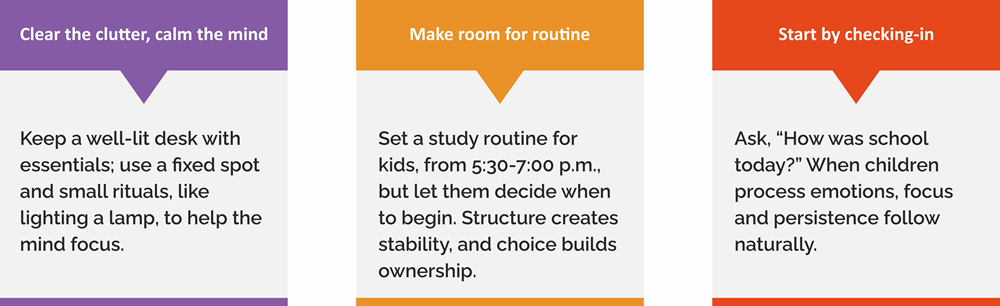
Before focusing on grades, focus on comfort. A study routine for kids begins with safety, physical and emotional.
Parent support, not parental control
The2024 Academic Motivation in Adolescents article highlights that when parents offer autonomy-supportive help, children display higher academic motivation. The difference often lies in tone:
“Show me how you tried solving this” sounds vastly different from “Why can’t you get this right?” In India, especially, parents often become de facto tutors.
Try these:
Ask your child to explain what needs to be done.
Listen without interrupting.
Guide only when they ask for clarity.
Celebrate the efforts more than the completion.
By giving space and empathy, you are supporting student learning, not supervising it.
Homework in Indian homes is rarely solitary. It is surrounded by grandparents’ advice, siblings’ chatter, and parents multitasking. Let children use this to their advantage.
Encourage your kids to share how they memorised poems or solved math problems in their time. It builds connection and perspective. Let siblings quiz one another; occasional chaos often makes learning assistance at home feel joyful and human.
Learning by the spoonful
Take a mother, Lavanya’s example – her son, Vicky, finally understood fractions when his grandmother used cooking to teach the principles: “Three cups of rice, one of daal – how much will be needed for six people?” The math stuck because the moment did. This is what kid-friendly study tips look like in real life.
Focus without frustration
Children often struggle to concentrate, especially after long school hours. Instead of enforcing the need to focus, try building it through gentle cues.
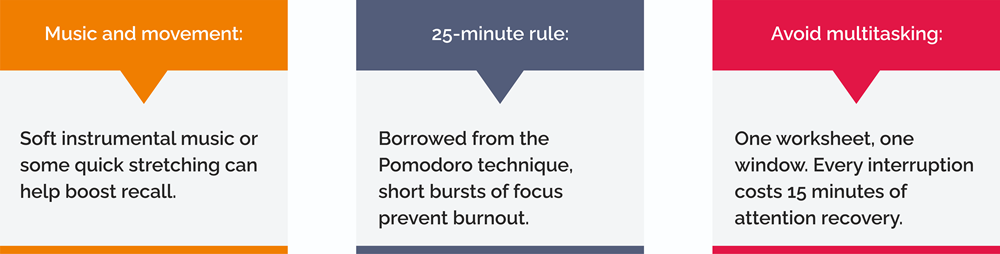
A systematic review found that classroom-based short physical and mindfulness breaks support attention and reading comprehension, which boost overall academic success.
Managing stress without losing connection
Homework stress often comes from fear of disappointing parents. Shift the after-study conversation. Instead of “Did you finish everything?”, ask them:
“What was the most interesting thing you learnt today?”
“Which part was a bit more challenging?”
“What would you like to try differently tomorrow?”
These questions nurture resilience and homework stress relief by shifting focus from results to learning.
Collaboration over competition
Teachers and parents share the same goal, nurturing a child’s growth through shared understanding. When communication stays open, homework goes from a struggle to a shared journey.
Simple messages such as “She found this topic tricky; could we try another method?” open dialogue and show teamwork. Empathy, when shared, strengthens educational support for children far beyond the classroom.
Strengthening the circle of support
Small actions strengthen the bond between teachers and parents, transforming homework into a shared growth experience.
Keep a two-way journal
Exchange brief weekly notes on what the child enjoyed, struggled with, or learnt – making daily updates possible.
Set common learning goals
Agree on a few shared goals each term, such as reading, confidence-building, or time management, so home and school reinforce progress consistently.
Use positive language
Focus on progress instead of errors; positive, specific feedback keeps children encouraged and motivated to keep trying.
Share learning moments
Exchange small real-life examples of learning – solving a puzzle, cooking, or reading together – to connect classroom lessons with home life.
Keep conversations open
Replace formal updates with friendly, ongoing chats. A quick voice note or email helps bridge understanding before challenges now.
Homework will always be part of growing up, but how families hold that time defines its meaning. Across India, parents are quietly transforming homeworkinto a ritual of connection and balancing homework and playinto everyday life lessons. By shifting from correction to collaboration, tension to teamwork, and routine to reflection, parents help children build lifelong learning habits rooted in patience, purpose, and quiet confidence.
Because helping kids with homework is about shaping how they will face every question life brings: with curiosity, calm, and courage.
Over the past decade, education has transformed from rote memorization to cultivating curiosity and critical thinking. Schools now emphasize global awareness, local engagement, and holistic development, integrating arts, sports, and technology. Learning extends beyond the classroom through real-world experiences, fostering adaptability, empathy, and a lifelong love for exploration.
A decade ago, a school day followed a predictable rhythm. Classes were neatly arranged in a timetable, subjects were taught in isolation, sports were tucked into an afternoon slot, and art was reserved for “free periods.” Education was important, but it often felt like a checklist of tasks to complete rather than a journey to experience.
Today, step into a modern classroom and you can feel the shift immediately. The walls seem to breathe with curiosity. A science project can prompt a discussion about climate change. A literature class might spark a theatre performance. The energy on the sports field often flows back into lessons about teamwork and resilience.
To be a learner today is to connect subjects, ideas and experiences in ways that shape not just what you know, but who you are. Over the last decade, education has grown from being a narrow path to success into a wide canvas for personal and collective growth.
In the past, knowledge was something delivered in a fixed sequence, to be absorbed and recalled. Today, it is something to be explored. Students are encouraged to ask questions, connect ideas, and challenge assumptions.
Being a learner now means thinking critically, seeing links between disciplines, and knowing that understanding is built as much through curiosity as through instruction. Modern classrooms foster independent thinking, blending global perspectives with local relevance. A lesson on climate change may inspire a sustainable gardening project in the schoolyard. A literature class may draw parallels between classic novels and current events.
This approach makes learning meaningful and alive qualities that define the learners of today.
Global curriculum with local roots
Schools have embraced curricula that combine rigorous academics with a global outlook. Learners are not only preparing for exams; they are preparing for life in an interconnected world.
Being a learner today means being globally aware yet locally grounded. A science lesson might involve collaborating with students from another country, building cross-cultural communication skills. A geography project could focus on mapping biodiversity in the local neighbourhood, fostering responsibility for one’s community.
This balance provides students with adaptability, empathy, and the ability to confidently navigate both familiar and unfamiliar contexts.
The influence of sports and the arts on shaping learners
One of the most important shifts has been recognising that education does not happen only at a desk. Sports, performing arts, music, and creative pursuits are now seen as essential parts of the learning process, not as extras.
Through sports, students develop resilience, discipline, leadership, and teamwork. Through theatre, dance, or music, they learn empathy, self-expression, and confidence. These experiences bring balance to the demands of academics, blending intellectual growth with creativity and physical wellbeing.
A winning goal on the field or a powerful stage performance is now valued alongside a high exam score because both reflect dedication, skill, and personal growth.
A holistic approach to growth
The most defining change in the last decade has been the shift towards holistic development. Education now seeks to nurture the intellectual, emotional, physical, and social aspects of a student’s life.
Being a learner today means understanding that wellbeing is central to achievement. Mindfulness sessions, peer-support initiatives and accessible counselling create an environment where students can thrive. They are encouraged to reflect on their learning, take ownership of their progress and develop values that extend beyond academics.
When learners feel supported and understood, they become not only better students but also better human beings.
Technology: An open door to the world
Technology has transformed the pace and possibilities of learning. Classrooms are no longer limited by geography. A student can attend a live session with a marine biologist halfway across the globe, or explore historical sites through virtual reality.
Yet, technology isn’t replacing human connection — it’s enhancing it. Teachers remain the anchors, guiding students through the flood of information, helping them think critically, and encouraging them to use digital tools responsibly and creatively.
Beyond the classroom: Learning through experience
Education today values what happens outside traditional lessons just as much as what happens inside. Field trips, community service, internships, and : these experiences encourage responsibility, empathy, and practical skills.
Students might run a school enterprise project, organise a charity fundraiser, or conduct a neighbourhood survey as part of a social science unit. These real-world connections help them see the relevance of what they’re learning and prepare them for life beyond school walls.
The learner of today
To be a learner today is to be an explorer. It’s about balancing the pursuit of knowledge with the development of character, creativity, and compassion.
It’s about understanding that success is not only measured in grades, but in the ability to think independently, work with others, adapt to change, and stay curious.
The last decade has reshaped education into something far richer and more human. It’s not just preparation for the future — it’s an experience that shapes who you are, right now. And perhaps that is the most beautiful transformation of all.
STEM education teaches students to treat challenges as building blocks – opportunities to rethink and rebuild strongly.
In this article, you’ll find: ✅ STEM in the 21st century: More than a buzzword ✅ The hidden benefits of STEM education ✅ Why parents must pay attention ✅ India’s urgent STEM demand curve ✅ AI in classrooms: A partner in progress ✅ EdTech trends: Driving classroom change ✅ STEM without borders, curiosity at scale ✅ From STEM to strength: Growth that endures ✅ STEM learning: A shared path
Why does it work like that? How can I fix it?
Every time a child dares to ask this, the future shifts. If parents and teachers pause, listen, and equip children with the right tools, that spark can convert into a lifelong habit of questioning, reasoning, and building with confidence.
…………………………………………….…………………………………………….…………
When Saumya was eight years old, she dismantled her father’s old radio just to understand how it worked. Her parents were initially upset, but her father later told her, “Let your curiosity lead you.”
That encouragement opened a new path. Years later, Saumya used her coding skills to design a flood-alert system for her village. She didn’t begin with answers; she started with questions.
That spark never left her. It still guides her choices, quietly and steadily.
…………………………………………….…………………………………………….…………
This is what the importance of STEM education in the 21st century truly represents: nurturing resilient, agile thinkers who learn to approach uncertainty with courage and creativity.
STEM in the 21st century: More than a buzzword
In a world driven by automation, AI, and precision tools, innovation in education is no longer optional; it is essential. A well-built STEM curriculum in schools equips students to decode real-world problems, adapt under pressure, and see patterns others might miss.
India’s efforts through Atal Tinkering Labs are reshaping access. With10,000+ labs now active across India and 1.1 crore students – 60% in government schools – STEM is becoming more inclusive. Almost all these labs are co-ed or focused on girls’ education, strengthening equity across social and gender lines.
But what does this mean for a child’s growth?
The hidden benefits of STEM education
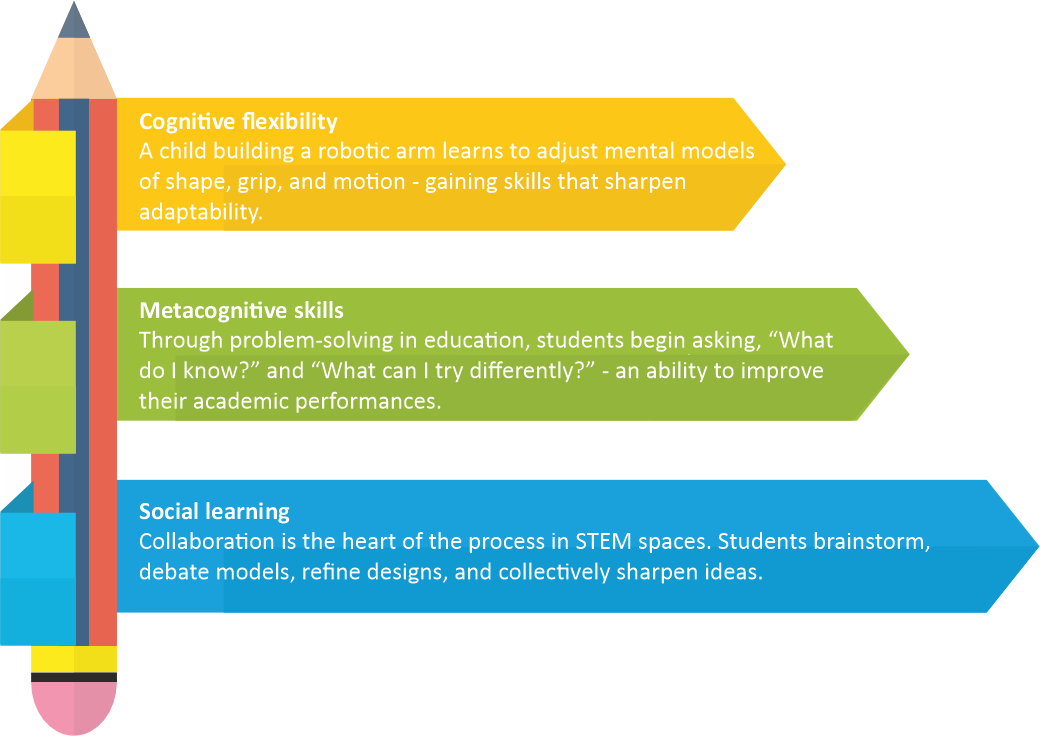
When we picture STEM, we often picture coding classes, white lab coats, or robotics. The actual benefits are quieter and run deeper.
These outcomes rarely appear on report cards, yet they shape futures profoundly.
Why parents must pay attention
Parents sometimes ask if coding or robotics education matters for children learning towards arts, literature, or sports. The answer is yes. STEM programmes in schools are about cultivating flexible thinkers and problem solvers, regardless of their career path.
Artists today experiment with mathematical patterns and digital design tools.
Writers utilise data analysis and publishing platforms.
Athletes depend on biomechanics, data analytics, and technology to improve performance.
The goal is to inculcate digital skills in students that strengthen whichever path they choose in the future.
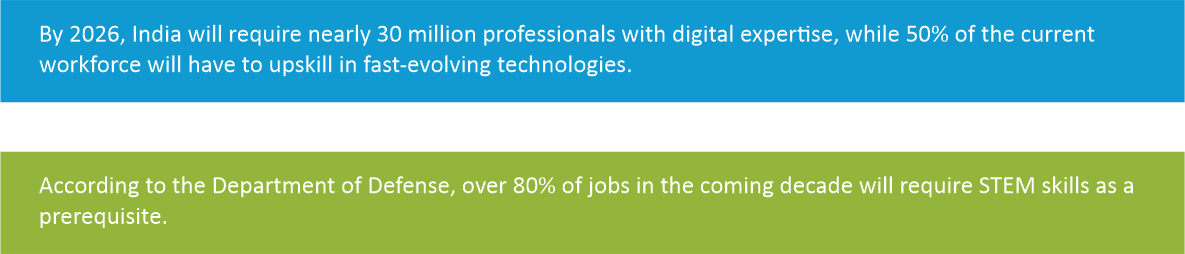
India’s urgent STEM demand curve Our nation stands at a crucial point, and digital fluency and adaptability are now essential, making STEM education the backbone of future readiness.
This shows how tightly STEM and economic growth are linked. The nation’s ability to stay ahead in global competitiveness depends on how well students are prepared for tomorrow’s challenges, today.
AI in classrooms: A partner in progress
Utilised with intent, AI in the classroom adds a new dimension. Adaptive platforms break down complex ideas, guide students, and adjust learning paths in real-time. For students struggling with pace or concepts, AI creates personalised entry points.
Yet, no system can replace the warmth of a teacher celebrating a student’s small victory or calming pre-exam nerves. Technology can guide thinking, but teachers shape the heart of learning.
But the real impact comes from innovators who make STEM learning affordable and hands-on. Platforms such as STEMpedia,Avishkaar, andThinkTac are equipping schools with hands-on innovation kits, converting abstract concepts into tangible problem-solving experiences. With hybrid models becoming the norm, classrooms are being reimagined, shifting the focus from screens to flexibility, access, and collaboration.
STEM without borders, curiosity at scale
Globally, every approach differs, but the aim remains consistent: preparing students for a rapidly changing future by combining innovation with context.
An American nonprofit organisation,Project Lead The Way (PLTW), brings hands-on STEM programmes to schools, with projects like medical devices or sustainable city designs that link classroom learning to real-world problem-solving.
According to the 2025India Brand Equity Foundation report, India hosts about 5.8 million STEM professionals, accounting for 28% of the global pool and 23% of global software engineers, highlighting its pivotal role in the knowledge economy.
From STEM to strength: Growth that endures
The importance of STEM education in the 21st century is often measured in GDP growth or patent counts. But its deeper value lies in resilience.
India’s momentum in semiconductors, renewable energy, health-tech, and space exploration tells a compelling story of STEM-driven progress. ISRO’s Chandrayaan-3 made history by placing India among the select nations to land on the Moon, while Aditya-L1 now studies the Sun from space. In green energy, India leads one of the world’s largest solar initiatives through the International Solar Alliance. In health-tech, pandemic-era innovations such as portable ventilators set new global benchmarks for affordability and impact. And in digital connectivity, the Unified Payments Interface (UPI) has redefined transactions worldwide, placing India at the forefront of digital finance.
These milestones show that the strength of STEM lies in numbers and towards nurturing thinkers who can question, adapt, and create under pressure.
STEM learning: A shared path
What teachers can do
What parents can do
Begin with inquiry: Start your lessons with, “What do you think will happen?”
Ask thoughtful questions: When picking schools, check for coding or robotics labs, and whether teachers are trained in STEM and AI tools.
Link to real-world issues: Frame lessons around local challenges that include water, waste, or health to make STEM meaningful.
Create hands-on moments: Support them in mini projects such as puzzles or simple circuits, so that learning continues beyond books.
Model reflection: Speak your mind, adapt as you go, and let your students see your reasoning process.
Value curiosity over perfection: Encourage questions, celebrate wins and even failures, especially for girls stepping into STEM.
Encourage teamwork: Group projects in STEM programmes in schools help train students to debate, test, and change their ideas.
Guide digital use: Discuss the ethics of AI, set healthy limits on screen time, and encourage children to engage purposefully with digital content.
Curiosity is the beginning of everything that matters. By turning classrooms into spaces for problem-solving in education, we prepare students to question, experiment, and adapt to an unpredictable world. STEM programmes in schools are all about nurturing sharp, agile minds that can solve, adapt, and grow across any field. As parents, educators, and mentors, the greatest gift we can give children is the confidence to ask “why” and the courage to chase the answers.
Gentle routines, clear boundaries, and self-compassion lower parenting stress and strengthen attachment.
Before we begin, here’s what this article offers: ✅ Why this conversation matters right now ✅ A pause that changed everything ✅ What we didn’t learn growing up ✅ The science behind self-care ✅ Why self-care is vital during exams ✅ Practical self-care tips for busy parents ✅ What children learn when they see self-care ✅ What self-care is not, and what it is
Children don’t need a perfect parent.
They need a present one.
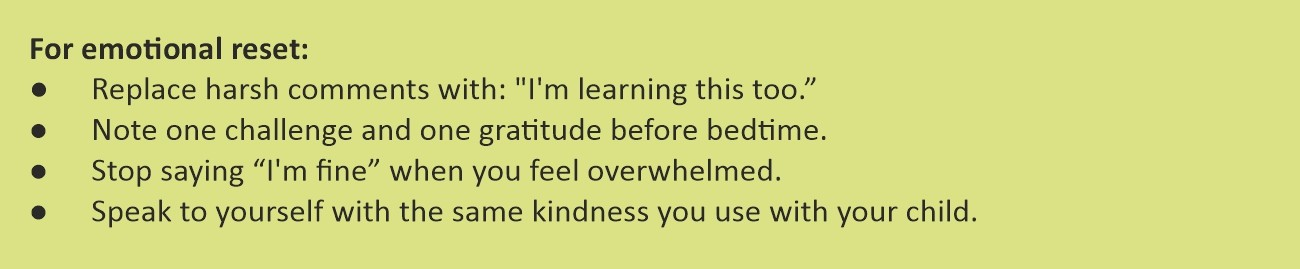
Anyone who has navigated parenting on low sleep, long workdays, and rising expectations knows that staying calm is not always easy. Parenting pulls energy from the deepest places, and that energy gets replenished through self-care for parents. Not through elaborate routines, but through tiny actions that hold you together: pausing before reacting, recognising when your mind feels stretched, and setting limits without guilt.
Over time, these small decisions shape the emotional climate at home. When you take care of your own well-being, your child sees balance, boundaries, and emotional safety in action. Self-care isn’t selfish; it sits at the centre of compassionate parenting.
Why this conversation matters right now
Parenting demands emotional presence every day, not just during big moments. As a parent, you try to hold everything together, often at the cost of your own rest. Children absorb this emotional climate instantly. This becomes even more evident during exam season, so self-care becomes a steady anchor rather than a seasonal fix.
When a parent’s internal world feels overloaded, even a slight sigh or shift in tone can unsettle a child. Instead of giving attention to their textbook, they begin scanning the room for emotional cues.
The science behind self-care is simple: when you feel calm, your child feels more relaxed, too. Moreover, these patterns explain why self-care can also improve parenting.
A pause that changed everything
Radhika, a CA by profession, was highly involved in her son Rohan’s Class X exam preparation. She revised chapters with him, helped with practice papers, chased deadlines, and worked late into the night. In the process, she dropped her evening yoga and let her rest slide.
One February evening, she snapped at Rohan over a spelling error. Later that night, she realised that she had reacted not as a guiding parent but as a tired adult. The following week, she restarted her 20-minute yoga routine. She told Rohan, “If I do not stretch and breathe, I feel tense. You do not deserve the tense version of me.”
The change surprised both of them. Their study session felt calmer, and conversations opened up. This was also when Radhika realised how self-care makes you a better parent.
What we didn’t learn growing up
Many Indian households taught a different idea of strength. Adults once hid their tiredness, pushed through pain, and treated rest as a sign of weakness. Many parents grew up with that model, so they repeat it now – delaying their own needs, responding instantly, staying up late, and feeling guilty for wanting a pause.
This is why the importance of self-care for moms and dads runs deeper than it seems. Children watch everything, including how we treat ourselves. That becomes their template for adulthood. A template built on balance serves them far better than one built on burnout.
The science behind self-care
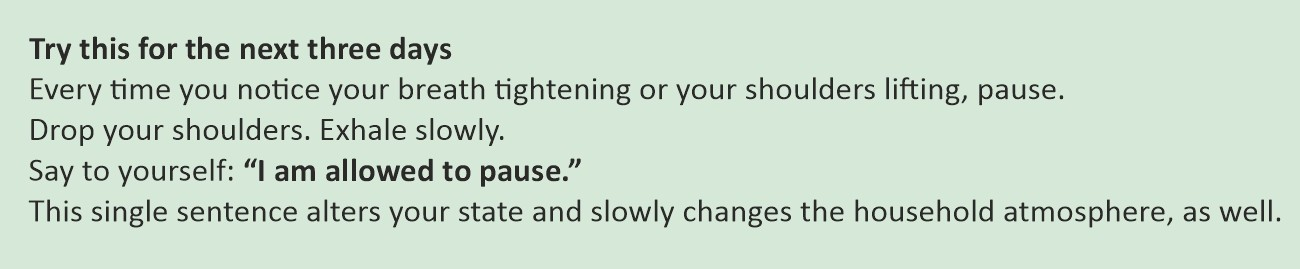
Parenting demands quick decision-making and emotional flexibility. When stress increases, the body enters fight-or-flight mode. This can turn small moments into big reactions.
Here’s what actually happens inside the body:
The brain needs downtime to reset
Stress hormones rise when rest is ignored
Heart rate and breathing become faster when tension builds up
The nervous system settles when you practice self-compassion
This chain explains why self-care for parents has long-term value – your emotional state silently shapes your child’s emotional development.
Why self-care is vital during exams
Children listen to instructions, but they react to the atmosphere. The way you enter a room, the pace of your breathing, the warmth in your voice – all of these signal safety or stress.
When your own needs get ignored:
The body slips into survival mode
Patience dries up
Tone sharpens without warning
Children assume they did something wrong
When mindful parenting and self-care guide your day:
Your energy feels steadier
Conversations soften
Children feel safe asking questions
Confidence rises naturally
Calmness at home comes when the parent has enough space within themselves to tackle and manage stress.
Practical self-care tips for busy parents
Most parents do not have extended hours for elaborate routines. That is why simple, repeatable habits work best. These ideas support mental health for parents in everyday moments.
These practices maintain steadiness and prevent overload. They support long-term parenting and self-care without adding pressure.
What children learn when they see self-care
Self-care not only changes your emotional state, but also your physical state. It teaches children how to look after their own well-being. When they see you regulate, they learn how to regulate themselves.
Children internalise messages like:
“I can say no when I feel overloaded.”
“I can ask for space.”
“My worth isn’t tied to an output.”
“Rest is part of hard work.”
This is how self-care helps manage parenting stress and builds lifelong social-emotional skills in children.
What self-care is not, and what it is
What self-care is not
What self-care is
❌ Selfish ❌ A luxury ❌A reward ❌ Something to “earn” ❌ Only for mothers ❌ A trend
✔️ Emotional hygiene ✔️ A simple regulation tool ✔️ Silent support for your child ✔️ A survival skill ✔️ The backbone of confident parenting
Remember, you are not a machine raising a child. You are a human raising a human.
You do not have to hide your exhaustion or pretend to be strong every moment. Your child does not need a superhero; they need a grounded, steady adult. Self-care is the reminder that your needs matter too. It protects your health, shapes your home’s emotional climate, and teaches your child that balance is a strength. Strong parents repair, reset, and rise again, and every repair starts with one simple truth: self-care isn’t selfish. It is love in action.
Empowering students with the knowledge and tools to protect our oceans, for today and for generations to come.
In this article, you discover: ✅ Why should we care about the ocean? ✅ A silent threat: Ocean acidification ✅ Stemming the tide: The plastic waste reduction ✅ Reviving the ocean’s rainforests: Coral reefs ✅ Travel without a trace: Eco-friendly tourism ✅ Ocean clean-up: Technology to the rescue ✅ Ways to protect the ocean: Starting in schools
Myth: The ocean is too vast to be harmed by human activity.
Reality: The ocean absorbs 30% of global CO2 emissions, and it is reaching a tipping point.
Rising carbon levels are making the ocean increasingly acidic, a process known as ocean acidification. This, in turn, silently disrupts marine life, weakens coral reefs, and erodes the balance of coastal ecosystems. What once felt vast and invincible is now fragile and at risk. This is one of the most urgent reasons why we need to protect our oceans, not only through action but also by spreading awareness at the grassroots level.
So, when we talk about the reasons why we need to protect our oceans, we are talking about the air we breathe, the food we eat, and the future we build.
“The sea is a mirror. What we throw at it, we see again – in our food, air, and our lives.”
A silent threat: Ocean acidification
Imagine placing seashells or eggshells in a glass of fizzy soda. Over time, they lose their shine and crumble. That’s precisely what carbon dioxide does to the ocean. The CO2 dissolves into seawater, causing ocean acidification, which weakens corals, shellfish, and eventually the entire food chain.
As per the2020 Implementation of Plastic Waste Management Rules annual report, India generates nearly 3.5 million tonnes of plastic waste annually. A staggering chunk of this enters the ocean through rivers like the Ganga and Yamuna.
In India, reefs in Lakshadweep and the Gulf of Mannar provide storm protection, fish nurseries, and tourism value. However, rising sea temperatures and pollution are making them fade into silence.
We often see so many viral videos of the ocean clean-ups happening internationally, but India is innovating, too. Slowly yet gradually, ocean clean-up technologies are becoming powerful tools, for example:
In the Ganga and Yamuna, high-tech trash skimmers now clear floating debris, including flowers, plastic, clothing, and puja waste, across stretches of up to four kilometres, removing nearly 15 tonnes a day during the Kumbh Mela.
Why it matters: These projects show that innovation doesn’t require grand labs; it begins with ingenuity, local commitment, and a problem-solving mindset.
………………………………………………………………………………………………………
Student: “Ma’am, why don’t we go to the beach for class trips anymore?”
Teacher: Because it is dirty…not safe and hygienic.”
Student: “Then who will clean it?”
Teacher: A long pause…
………………………………………………………………………………………………………
Ways to protect the ocean: Starting in schools
Every ocean-saving movement begins with awareness. And where better to spark that awareness about ocean literacy education than in schools, where the next generation learns to act before it is too late?
Ocean hour: Dedicated one class a month to marine life, conservation, and student projects.
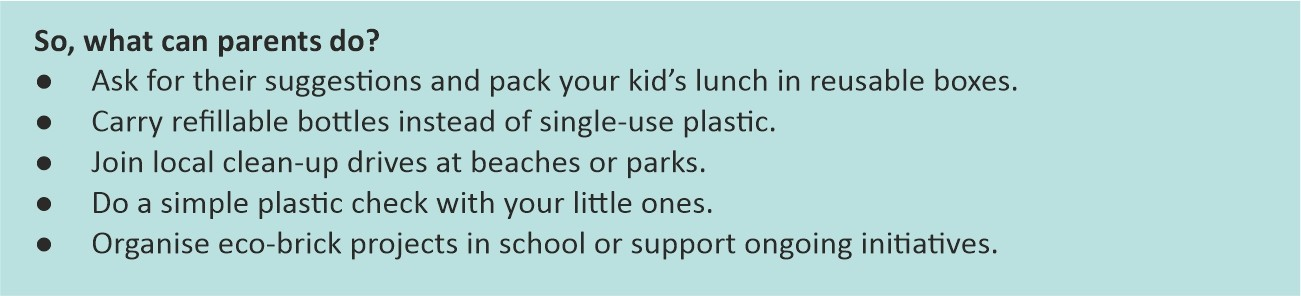
Student clean-up drives: Organise drives around lakes, ponds, or beaches, and track the waste collected.
Green partnerships: Invite NGOs, marine experts, or divers to share real-world stories with students.
Creative storytelling: Organise debates, plays, and poetry sessions on themes like “If Oceans Could Speak”.
Adopt a water body: Own a local pond or stream, monitor its health, and raise awareness in the community.
V-SSRC has been actively engaged in beach clean-up activities, weaving environmental action into student life. These drives not only restore coastal spaces but also instil a sense of ownership, showing students that protecting the planet begins with simple, hands-on steps in their communities.
Oceans Are Us program at VIBGYOR MUN
At the 12th VIBGYOR Model United Nations Conference, students explored the theme of UN Sustainable Development Goal 14: Life Below Water while supporting The Jane Goodall Institute’s “Oceans Are Us” program. This gave them the opportunity to voice perspectives on marine conservation before a global audience.
12th Model United Nations Conference Protecting our oceans is not a distant responsibility but an urgent call that demands attention in every shoreline community and classroom. From coral reefs in Lakshadweep to the rivers flowing into the Bay of Bengal, the health of our waters mirrors the decisions we make each day. By empowering students through ocean literacy education, supporting marine pollution prevention, and encouraging sustainable practices, we are restoring marine ecosystems and preparing a generation that understands its role as custodians of the planet.