Hidden Pressures Students Carry Beyond Board Results

By Kavita Kerawalla, Vice Chairperson, VIBGYOR Group of Schools

Every year, board exam results dominate headlines and dinner table conversations. Marks become shorthand for merit, potential, and even character. Yet, beyond the scorecards lies a quieter, heavier reality that students carry pressures that no report card can capture. Academic performance is only the visible tip of a much deeper emotional, social, and psychological burden.

The Weight of Expectations

For many students, the pressure begins long before they enter the examination hall. Expectations from parents, teachers, and society often turn education into a high-stakes performance. A nationwide survey by NCERT found that 81% of students experience acute anxiety related to studies, exams, and results.

This anxiety is rarely about one exam alone. It reflects a broader fear: disappointing loved ones, losing social standing, or missing out on future opportunities. When approval becomes tied to marks, self-worth can shrink to a number.

Social Expectations and Family Pressures

Cultural and familial expectations can compound academic stress. In many homes, board results are discussed almost like a verdict on a child’s potential. While support and encouragement are invaluable, an overemphasis on grades can make students equate their self-worth with academic performance.

Parents may unintentionally amplify this pressure when they talk about future careers, college choices, or comparisons with siblings and friends. Students internalise these conversations, often masking their anxiety to avoid disappointing their families.

The Silent Contributors

Academic pressure does not exist in isolation. Modern student life introduces additional stressors — excessive screen time, sleep deprivation, and uncertainty about careers. A national student well-being report found that three-quarters of Grade 12 students get fewer than seven hours of sleep, often due to academic workload and late-night social media use.

Sleep deprivation affects concentration, emotional regulation, and resilience. Combined with constant online comparison and fear of falling behind, students can feel trapped in a cycle of exhaustion and self-doubt.

The Loneliness Behind Competition

Competitive academic environments often discourage vulnerability. Students may hesitate to share struggles, fearing they will appear weak or less capable. This isolation intensifies stress.

Research highlights that loneliness and lack of support systems are major contributors to student distress, with many relying only on peers or internal coping rather than seeking professional help.

When students feel they must endure pressure silently, emotional fatigue deepens.

When Stress Becomes Dangerous

The consequences of unchecked academic pressure can be severe. According to national crime data, over 13,044 students died by suicide in India in 2022, with exam failure cited as a contributing factor in many cases.

Behind each statistic is a young life overwhelmed by expectations and a lack of emotional support. These tragedies underscore that academic stress is not merely a motivational tool — it can become a mental health crisis.

Bullying, Identity and Peer Pressure

Academic stress is only one part of a student’s reality. Many also navigate peer pressure, bullying, and the constant need to fit in. Casual remarks about marks, appearance, or background can leave a lasting emotional impact. Social media often magnifies comparison and exclusion, making students feel judged even outside school hours.

At the same time, adolescence is a period of identity formation. When marks become the primary measure of worth, those who feel different may withdraw or doubt themselves. Academic disappointment combined with social struggles can deepen self-doubt. Understanding these overlapping pressures helps us see students not just as performers, but as individuals seeking acceptance and belonging.

Towards Supportive Change

Addressing these hidden pressures requires collective recognition and action:

1. Open Conversations at Home: Encouraging honest discussions about stress, expectations, and goals helps students feel seen and supported rather than judged.

2. Structured Counselling in Schools: Systematic access to trained counsellors can equip students with coping strategies and early intervention when needed.

3. Emphasis on Life Skills: Teaching emotional regulation, time management, and stress resilience prepares students for challenges beyond exams.

4. Community Awareness: Reducing stigma around mental health and normalising help-seeking behaviour can transform how students experience pressure.

Conclusion

Academic results matter, but not at the expense of emotional well-being. Students carry many pressures beyond test scores: dreams, fears, social expectations, sleep debt, and the quest for identity. Recognising and addressing these unspoken burdens is crucial to helping young people grow not just as learners, but as resilient, balanced individuals. If we widen our lens beyond marks, we see students not merely as carriers of grades but as human beings deserving empathy, support, and space to thrive.

Joyful Learning is Created, Not Left for Chance

This International Day of Happiness, here are practical steps to make joy part of the timetable and help every student feel valued.

In this article, you can discover:
✅ What does happiness look like in a classroom
✅ The emotional climate of learning
✅ The psychology behind joyful classrooms
✅ How positive learning spaces are taking shape
✅ What makes a classroom feel positive?
✅ Practical steps to increase student happiness
✅ VIBGYOR Group of Schools: Joy at the heart of learning

What does happiness look like in a classroom?

Is it a group of students who burst into laughter during group work?

Or the moment when a student realises mistakes are acceptable here?

For some, happiness means being heard.

For others, it is solving a problem that once felt impossible.

For someone else, it is the courage to take initiatives.

From confidence and comfort to connection and courage, joy wears many forms inside a classroom.


On International Day of Happiness, we remember that learning feels different in joyful classrooms, and every student deserves that.

Yet, these experiences never happen by chance. They grow from something deeper: the emotional atmosphere students experience every day. That atmosphere decides whether learning feels inviting or intimidating.

The emotional climate of learning

Every classroom has a feeling to it, and students can sense it immediately. They bring their own emotions, too, and together these define how they focus, participate, and learn.

If stress becomes part of the environment, learning becomes heavier. In fact, the 2024 Impact of Chronic Stress on Brain Function and Structure journal by Kenneth Blum states that chronic stress can disrupt memory formation, increase anxiety, and interfere with learning processes.

This is why mental wellness in education is central to academic success. Emotional safety boosts focus, supports understanding, and builds confidence. When confusion is met with support rather than ridicule, collaboration rises, and emotional well-being takes root.

But why does the emotional climate influence learning so deeply? The answer lies in psychology.

The psychology behind joyful classrooms

Before academic thinking begins, emotional response takes the lead. The brain opens or closes based on how safe a space feels.

Psychologist Barbara Fredrickson’s broaden-and-build theory explains that positive emotions broaden thinking, thereby increasing openness, creativity, and flexibility, while building resilience.

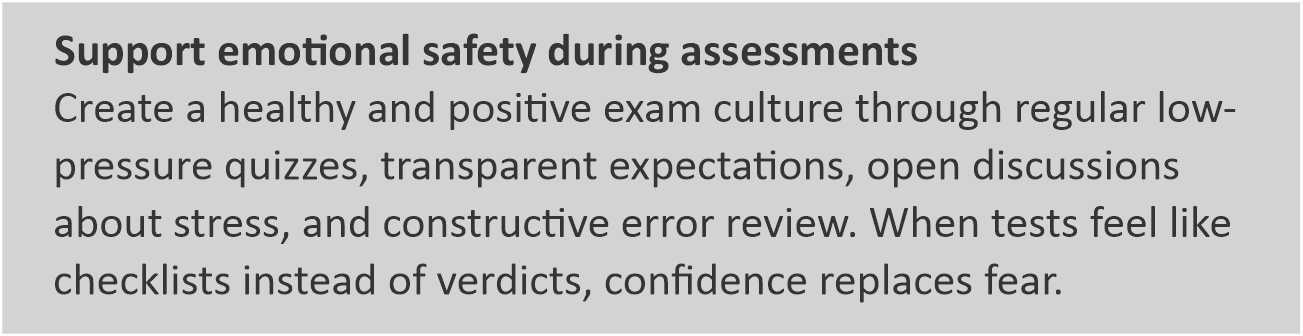
Inside classrooms, when students feel safe and valued, they take intellectual risks. They attempt hard questions. They try again after mistakes.

In classrooms where teachers openly analyse incorrect answers without attaching shame, students are more willing to attempt challenging tasks. A 2022 formative assessment by the National Institute of Health mentions that both students’ and teachers’ participation is a key component to developing students’ performance.

Moreover, schools that implement restorative discipline instead of punitive measures improve school climate and enhance social and emotional skills among students, all of which support emotional safety and engagement.

Recognising the role of emotions in learning is influencing how classrooms evolve each day.

How positive learning spaces are taking shape

Joyful learning spaces are not created by a single special period in the timetable. They are built into the fabric of a classroom – in how teaching happens, how students interact, and how mistakes are handled. When emotional safety becomes part of daily practice, classrooms feel different. Across India and around the world, educators are introducing engaging classrooms through structured initiatives.

  • Happiness Curriculum: Daily emotional grounding

In 2018, government schools in Delhi introduced a daily Happiness period that centred around mindfulness and reflection. In this curriculum, students begin with breathing exercises, listen to short stories on empathy or resilience, and engage in guided circle discussions.

A 2020 study on Happy Classrooms by the Brookings Institution highlights stronger emotional readiness and improved engagement, particularly among first-generation learners.

Students are encouraged to share their experiences openly, listen with empathy, and are reminded that their voices matter.

  • Little KITEs IT Clubs: Learning through creation

In Kerala’s Little KITEs IT Clubs, students build and experiment with robotics and coding projects. When something fails, they collectively examine what happened rather than assigning blame. Instead of asking “Who made the mistake?”, the focus shifts to “How can we improve this?” This collaborative problem-solving builds resilience and confidence through interactive and fun learning methods.

  • Agastya International Foundation: Curiosity in motion

Agastya’s Mobile STEM Labs across various rural districts in states such as Karnataka, Maharashtra, Tamil Nadu, Telangana, and Uttar Pradesh, brings hands-on science to schools without lab access. Students test ideas, revise conclusions, and build confidence through active experimentation, replacing hesitation with curiosity.

  • KidsMatter: Mental well-being as part of learning

Australia’s KidsMatter framework integrates emotional health into everyday schooling through structured social-emotional learning and early support systems.

  • KiVa Programme: Creating emotionally safe environments

Finland’s KiVa programme is a structured anti-bullying initiative that strengthens empathy, peer responsibility, and emotional safety through coordinated classroom practice.

Learning feels different in spaces that encourage exploration and shared experiences – more open, more active, more alive.

What makes a classroom feel positive?

You can sense it almost immediately. Some classrooms feel open to sharing ideas, taking risks, and making mistakes without fear. That feeling grows from three impactful and powerful forces:

  • Teachers who respond with steadiness and respect
  • Peers who treat one another with dignity
  • Effort that is noticed and valued, not overlooked

According to John Hattie’s research, strong teacher-student relationships play a powerful role in learning as they increase engagement, strengthen motivation, and help students keep going even when work gets difficult.

These principles guide effective teacher-led approaches for joyful learning and anchor daily classroom practices.

Practical steps to increase student happiness

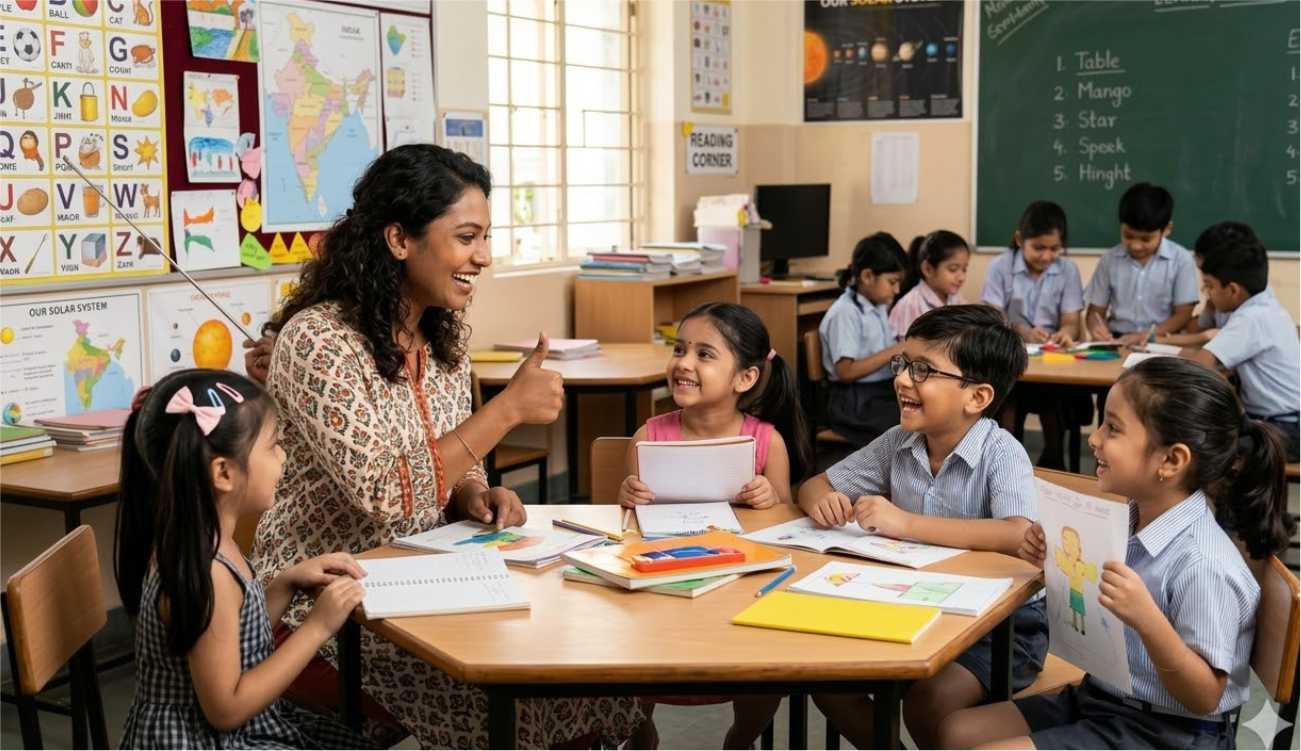
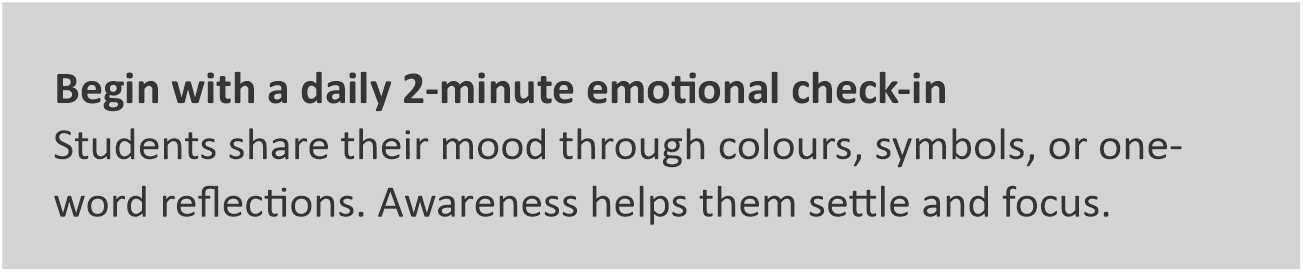
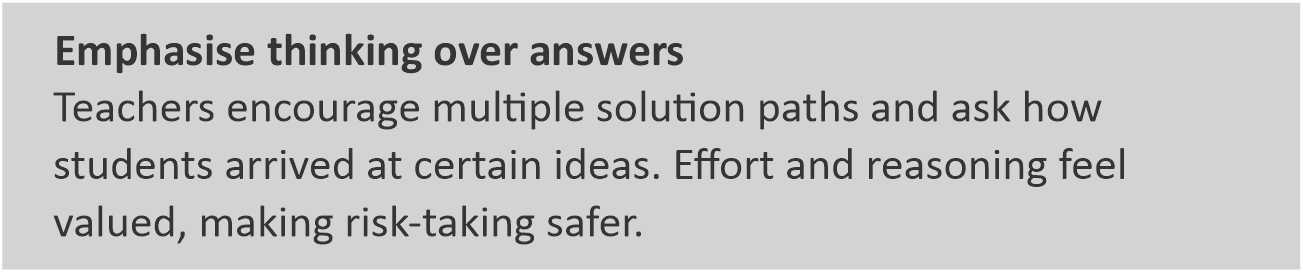
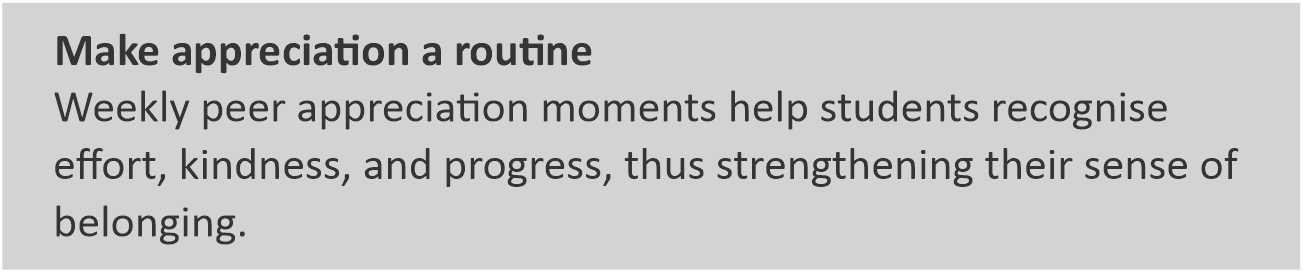
Creating emotional safety requires routine action. The following ideas demonstrate how to create joyful learning environments in schools through consistent daily practice.

These happiness-focused activities for classrooms reinforce stability through repetition.

VIBGYOR Group of Schools: Joy at the heart of learning

These principles are already being implemented through structured well-being programmes for children in schools. At VIBGYOR Group of Schools, joyful learning is intentionally built through a holistic, child-centred approach that supports the emotional, social, creative, and intellectual growth of children together.

Through structured Sports and Performing Arts programmes, we foster expression and confidence, as well as enrichment activities that build creativity, resilience, and a growth mindset. Social-emotional learning is integrated into the curriculum, helping students develop self-awareness, relationship skills, and responsible decision-making.

Personalised Learning Centres provide guidance from counsellors and special educators, ensuring individual needs are understood and supported. Teaching practices emphasise collaboration, creativity, and reflection rather than rote memorisation.

Together, these efforts allow students to feel accepted, encouraged, and ready to participate and learn with confidence.

On this International Day of Happiness, it is worth remembering that joyful learning in the classroom isn’t a one-day celebration. It is the everyday feeling of being safe. Safe to ask, safe to try, safe to make mistakes and still be respected. Classrooms that nurture a sense of safety, connection, and confidence help students engage more deeply, take more risks, and grow stronger over time. That is the true purpose of joyful learning environments, guiding learning through how students feel each day.

Introducing Curiosity Meets Joyful Learning

VIBGYOR Group of Schools has always held the belief that learning begins long before a child picks up a textbook. To us, it begins with a brief spark of curiosity in a child’s eyes when they see, touch, or ask about something for the first time.

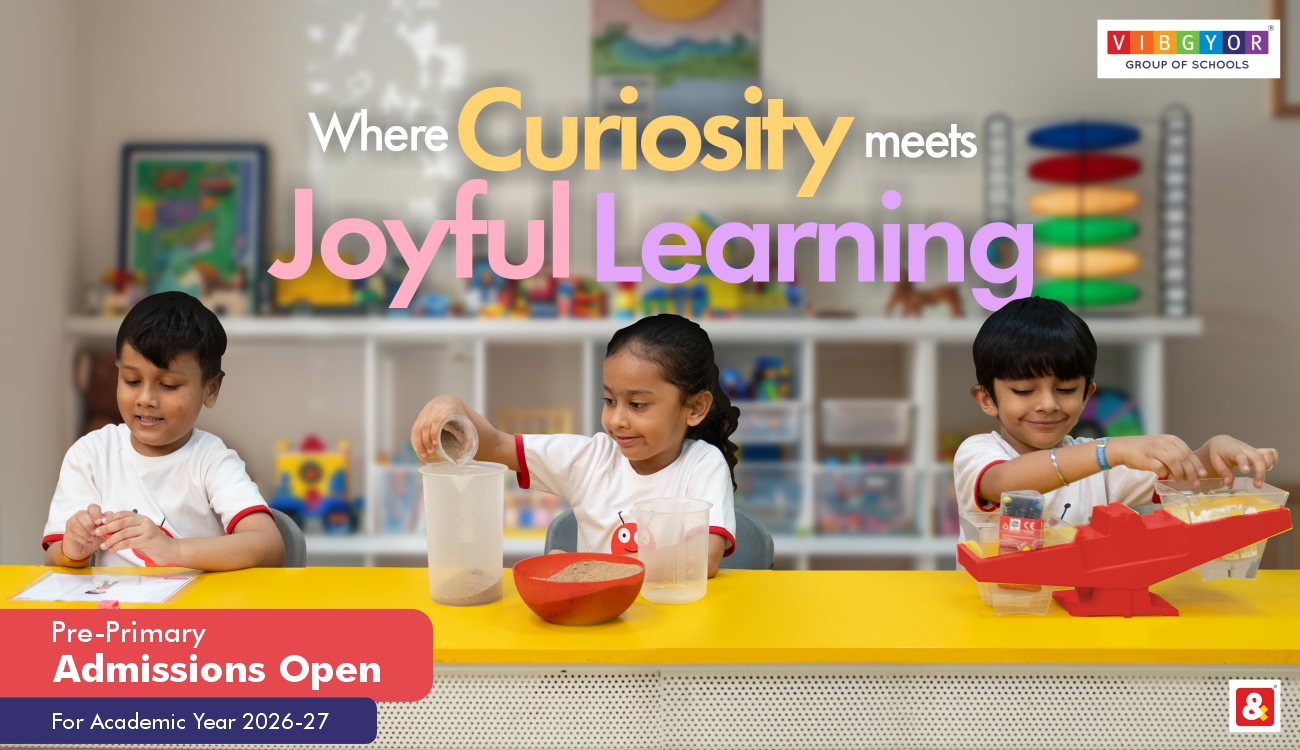
It is this very spark that inspires our new campaign, ‘Curiosity Meets Joyful Learning’

Why Curiosity Matters More Than Ever?

Children today are growing up in a world of possibilities, a faster world, places a higher premium on asking better questions, and a world that actively engages and rewards the more creative thinkers. In this world, curiosity should not only be a quality, but rather a strength.

At VIBGYOR, we stand firm in our belief that when children are given the opportunity and responsibility to ask questions, wonder, explore, and imagine, learning goes from an undertaking to a joyous occasion. Through this campaign, we reaffirm our belief that true learning begins with curiosity when young minds ask questions that spark lasting moments of discovery.

Every “What if?” we ask opens a door to learning, and every learning leads to greater confidence, creativity, and courage.

Little Learners, Big Questions

When you walk into any VIBGYOR pre-primary classroom, you can see curiosity in action. Children are experimenting with colours, watching how plants grow, creating stories with their friends and having their own small “aha!” moments of celebration.

Their laughter fills the space, their hands are busy with building, painting, and exploring, and their teachers are right alongside, encouraging and celebrating their every step.

Questions are not interrupted; they are invited.

When children learn to think freely, they learn to think deeply.

Where Learning … Feels Like Discovery

At VIBGYOR, our learning is designed to feel like play – active, hands-on, and full of wonder. Our classrooms are built on the belief that curiosity must be nurtured, not directed.

This philosophy unfolds through our distinctive blend of approaches:

– A whole-child and child-centred approach to ensure every child learns in their own time and in their own way.

– A Play-Based and Story-Based Approach that transforms lessons into joyful experiences of imagination and expression.

– Integrated, thematic and spiralled learning builds connections across concepts to encourage children to continue exploring.

– A Life-centred and Activity-based approach connects learning from the classroom to understanding in life.

– Blended learning uses both traditional and modern approaches to foster engagement and self-discovery.

These philosophies translate into classroom experiences that are as engaging as they are educational. Activities like Storytime, reading books, puppetry and using props to tell stories invite imagination and discussion. Texture and soft books build familiarity with materials through touch and movement (sand, water). Art (bubbles, painting) invites creativity and exploration without limitations. Structured play, soft gym and tunnels encourage fine and gross motor skills in a fun way.

We bring this idea to life through inquiry-driven experiences that build understanding through exploration, play-based and sensory learning that involves the senses, imagination, and emotion and inclusive environments that celebrate every child’s individual pace and perspective.

Our 5Cs philosophy – Creativity, Critical Thinking, Communication, Collaboration, and Citizenship encourages learners to explore new ways of thinking, understanding, and engaging with the world built around the essential 21st-century skills that will prepare them to be a part of a world that values curiosity as much as knowledge.

Curiosity Meets Joyful Learning isn’t just a campaign; it’s a celebration of VIBGYOR’s commitment to nurturing every child’s inherent desire to learn, explore, create, and shine!

Admissions are now open for the academic year 2026–27.

See how Curiosity Meets Joyful Learning at a VIBGYOR school near you or contact us Monday to Saturday, between 9:00 am and 5:00 pm, at +91 600 3000 700. Click here for admissions: https://www.vgos.org/enquiry-form

VIBGYOR Group of Schools Expands Mumbai Footprint with New Campus in Gorai

VIBGYOR Group of Schools is expanding its presence in Mumbai with the launch of a new VIBGYOR Roots & Rise school in Gorai, Borivali West. Strategically located at L.T. Road, near Adani Power Substation, Gorai 3, the new campus has been thoughtfully designed to offer a nurturing, engaging and secure environment for early learners. 

With a strong emphasis on holistic development, the new school reflects VIBGYOR’s commitment to delivering quality early education in a space where children can explore, grow and thrive. 

Holistic Early Learning at Its Best 

Education at VIBGYOR Roots & Rise is anchored in developmentally appropriate practices and a research-based curriculum that supports foundational learning across all domains – cognitive, physical, emotional and social. The programme includes a rich mix of structured learning and creative exploration, empowering young minds with essential life skills like communication, critical thinking and collaboration. 

Students will also have access to best-in-class training in a diverse range of athletic and artistic disciplines. From skating, football, basketball and judo to music, dance, speech and drama, the curriculum encourages children to discover and pursue their interests from an early age. 

Key Highlights of the Gorai Campus 

  • Comprehensive Curriculum 
    A balanced programme designed to spark curiosity and instil lifelong learning habits through age-appropriate and experiential activities. 
  • Experienced Educators 
    A team of qualified, passionate teachers committed to creating a warm and engaging learning environment. 
  • Safe & Inspiring Campus 
    Child-friendly infrastructure with well-lit classrooms, secure outdoor play zones, and rigorous safety protocols including CCTV surveillance, trained security staff, and attentive support personnel. 
  • Collaborative Parent Engagement 
    Open communication channels and regular updates ensure that each child’s learning journey is consistently supported at home and school. 

A Word from the Leadership 

Speaking on the exciting new development, Kavita Kerawalla, Vice Chairperson, VIBGYOR Group of Schools, said, “VIBGYOR Group of Schools was built to give our future leaders an environment to grow and thrive intellectually, artistically, athletically, and morally. With our presence now in Gorai, we will be able to provide quality education to more children in a safe and secure environment that helps ignite a diverse range of passions and interests, thereby preparing them for a demanding new world.” 

Recognised for Educational Excellence 

With a legacy of over two decades in delivering exceptional K–12 education, VIBGYOR continues to receive national recognition for its innovation and impact. Recent accolades include: 

  • Outstanding School Group in Tech Practices – ET Excellence Awards 2025 
  • Excellence in Sports & Physical Education Initiatives – TechEDU India Summit and Awards 2025 

Founded in 2004, the VIBGYOR Group of Schools has consistently raised the bar in education across India, with a network of 40 schools in 15 cities serving over 50,000 students. Under the leadership of Mr. Rustom Kerawalla, Founder Chairman, the group is focused on nurturing excellence in academics, co-curricular activities, and character development through its distinctive approach to learning. 

Admissions for Academic Year 2026-27 are now officially open. 

To discover how your child can begin their journey at VIBGYOR Roots & Rise, Gorai, contact us Monday to Saturday, between 9:00 am and 5:00 pm, at +91 600 3000 700. 

We would love to welcome you and your child to the VIBGYOR family. Click here to watch a glimpse of our Gorai campus!  

Tech-Smart Parenting, Heart-First Approach

Creating safe, digital spaces, meaningful tech habits, and open dialogue for today’s young minds.

In this article, you can explore:
✅ Raising children in a digitally-connected world
✅ Digital well-being: The real balancing act
✅ The silent harm of cyberbullying
✅ Gaming to Esports: Gaming together, growing together
✅ Virtual learning tools: Scrolling with purpose
✅ Social media guidance: Filters vs. feelings
✅ A global wake-up call
  • 3+ hours
  • Social media. OTT. Gaming
  • Unfiltered content. Unseen risks

According to a LocalCircles survey, 61% of urban Indian parents of children aged 9-17 reported that their children spend an average of three hours or more each day on social media, videos/OTT, and online games.

This reality changes the parenting equation. Without mindful screen time management, the line between learning and overload blurs quickly. In today’s time, parenting is about staying curious, staying available, and staying human.

Raising children in a digitally-connected world

Let’s face it: children are becoming digital natives. They explore, connect, create, and sometimes struggle through screens. What makes this challenging is how silent the struggles can be.

Across India, over 82% of Indian children between 14 and 16 years are smartphone users, but just 57% use them for learning. In contrast, 76% primarily use their devices to access social media.

This doesn’t mean screens are the enemy. But it does mean that parents need to bring digital well-being into their everyday parenting vocabulary.

Digital well-being: The real balancing act

Truth be told, digital well-being is about guiding children to use technology in ways that nurture learning, creativity, and rest. It requires habits that are realistic and repeatable.


“It is not how long we are using screens that really matters; it is how we are using them and what’s happening in our brain in response.” Rich, Director of the Center on Media and Child Health, Boston Children’s Hospital & Associate Professor at Harvard T.H. Chan School of Public Health.


These choices teach children that mindful use matters more than minutes counted.

The silent harm of cyberbullying

Cyberbullying prevention is one of the toughest challenges for families and schools. Online bullying can take many shapes – being excluded from groups, cruel memes, mocking emojis, or impersonation.

According to the 2024 Silent Screams: A Narrative Review of Cyberbullying Among Indian Adolescents article by the National Library of Medicine, India has the highest incidence of internet harassment, with over 33% of children reporting having been the victim of it.

Gaming to Esports: Gaming together, growing together

While gaming can become overwhelming, it can also be structured into something constructive. Strategy games often sharpen problem-solving skills and improve hand-eye coordination.

India has now taken a formal step by recognising gaming and e-sports for kids as a competitive sport under the Online Gaming Bill 2025. For example, Krafton (the developer behind PUBG and BGMI) has launched an IPL-style franchise esports league in India, giving teenagers a regulated and professional platform.

………………………………………………………………………………………………

Rohini was folding laundry when she noticed her 11-year-old son, Kabir, staring blankly at his iPad.

“What’s wrong?” she asked gently.

He muttered, “Everyone’s gaming together online…they didn’t include me.”

Instead of scolding or grabbing the device, Rohini sat down beside him. “That must feel pretty rough, and you must have felt left out,” she said.

Kabir looked up, surprised that she understood him.

Together, they came up with a new plan: an offline challenge. That evening, they devised a “family carrom tournament board” on chart paper.

By bedtime, Kabir wasn’t sulking anymore; he was grinning, already asking, “Can we play another round tomorrow?”

………………………………………………………………………………………………………

Virtual learning tools: Scrolling with purpose

Learning now stretches beyond classrooms. Virtual learning tools are part of everyday study, offering interactive lessons and practice exercises. Even game-based platforms are being redesigned to introduce skills like coding, design, and teamwork.

But not every click equals learning. Parents can co-learn:

  • Watch a class together.
  • Ask, “What was engaging? What was confusing?”
  • Discuss how lessons can apply in real life.

Co-learning builds comprehension, and more importantly, it builds connection.

Social media guidance: Filters vs. feelings

Social media shapes how children express and compare themselves to peers. Social media guidance is more about building awareness. Conversations help children distinguish between real and performative posts, reflect on how scrolling makes them feel, and pause when emotions shift toward insecurity.

In fact, Instagram and YouTube now allow screen usage reports and time reminders. Use them together with your child to build digital awareness. This turns tracking into a shared tool for online safety for kids, not a hidden control measure.

Impact of screen time on child development

The impact of screen time on child development depends heavily on how technology is used.

  • Passive watching can create fatigue and distraction.
  • Interactive storytelling or puzzles can build skills.
  • Research and learning apps foster curiosity.

These simple reflections turn experiences into lessons in emotional literacy.

A global wake-up call

The concerns extend beyond India.

In Australia, a 2025 study published by the Psychological Bulletin was conducted among 2,92,000 children. The study highlighted how excessive screen time was linked to developmental problems, depression, and psychosocial problems.

Psychologist Jonathan Haidt, in his book “The Anxious Generation”, has mentioned that your child’s smartphone is a threat to their mental well-being. He and other child advocates suggest delaying smartphone access until age 14 or older, and reviving unstructured playtime as crucial.

A 2025 UNICEF report, Childhood in a Digital World, reveals that exposure to different forms of harmful content or hurtful experiences also affect children’s mental health negatively.

The global message is clear: awareness, balance, and connection are vital.


Your checklist for tech-smart parenting


There is no perfect script for raising children in the digital age. What works for one child may not work for another. But one truth cuts across every home: children need parents who show up.

Digital well-being, safe internet use for children, and social media guidance, along with digital literacy for children are conversations to be lived, one day at a time. Parenting in 2025 should be focused on a steady presence behind the screen, which includes listening, guiding, and learning alongside your child.

Because when parenting starts with empathy and heart, even the most complex digital world becomes a safer, kinder place to grow.

When Homework Feels Heavy, Become Their Calm

Help your little ones view every assignment as an opportunity to grow, reflect, and take pride in their efforts.

In this article, you’ll find:
✅ The homework paradox
✅ The new homework hour: A mirror into modern parenting
✅ Building a safe homework zone
✅ Parent support, not parental control
✅ The global homework debate
✅ Homework and family dynamics
✅ Focus without frustration
✅ Managing stress without losing connection
✅ Collaboration over competition
✅ Strengthening the circle of support

“Mom, I can’t do this.”

“You can. Let’s look at it together.”

Think back to your own childhood. Remember those evenings spent figuring out equations or essays under your parents’ watchful eyes? The frustration, the sighs, the small triumphs? Homework has evolved, from pen-and-paper to projects and digital learning, but one thing remains constant: the need for support. Today, helping kids with homework is about creating a space where they feel safe to try or to make mistakes. Supporting them through this process often reveals more about their strengths than any grade ever could.

The homework paradox

Across India, homework time often becomes a daily balancing act. Parents want to help but usually find themselves torn between encouragement and expectations.

According to the National Council of Educational Research and Training (NCERT) survey, 81% of students reported that studies, exams and results caused them anxiety. In fact, schools in South Korea assign their students an average of 2.9 hours of homework per week, a relatively low amount.

In India, however, long assignments, tuition routines, and limited downtime create a culture of fatigue. Yet, small changes at home can redefine this experience. Effective study habits begin right at the dining table – by listening, pacing, and softening the tone.


A scene that plays out everywhere

Homework time can feel familiar – lessons waiting, parents guiding, and children hesitating. Between corrections and encouragement, emotions run high. A little patience, a listening ear, and the right approach transforms tension into teamwork.

This is where homework strategies and parent homework support make a difference.


The new homework hour: A mirror into modern parenting

In many cities, 7 p.m. to 9 p.m. has unofficially become “homework prime time.” Parents close their laptops, children unpack their books, and fatigue sits between them disguised as focus. What was meant to build confidence often ends up being a test of patience.

So what is the new rule: less correction, more connection

Because children remember how homework felt, not just what it contained. Gentle guidance helps in supporting student learning and building good study habits.

Building a safe homework zone

Before focusing on grades, focus on comfort. A study routine for kids begins with safety, physical and emotional.

Parent support, not parental control

The 2024 Academic Motivation in Adolescents article highlights that when parents offer autonomy-supportive help, children display higher academic motivation. The difference often lies in tone:

“Show me how you tried solving this” sounds vastly different from “Why can’t you get this right?” In India, especially, parents often become de facto tutors.

Try these:

  • Ask your child to explain what needs to be done.
  • Listen without interrupting.
  • Guide only when they ask for clarity.
  • Celebrate the efforts more than the completion.

By giving space and empathy, you are supporting student learning, not supervising it.

The global homework debate

CountryHomework focusKey idea
FinlandMinimal homeworkLearning through play
JapanPractice with reflectionBuilding discipline and routine
USABalanced homework policiesEncouraging independent conversation
IndiaQuantity-driven assessmentsSlowly shifting to skill-based work

As classrooms across India evolve with new learning approaches, homework, too, is changing. Schools are gradually shifting toward educational support for children that values creativity, curiosity, and collaboration.

Homework and family dynamics

Homework in Indian homes is rarely solitary. It is surrounded by grandparents’ advice, siblings’ chatter, and parents multitasking. Let children use this to their advantage.

Encourage your kids to share how they memorised poems or solved math problems in their time. It builds connection and perspective. Let siblings quiz one another; occasional chaos often makes learning assistance at home feel joyful and human.


Learning by the spoonful

Take a mother, Lavanya’s example – her son, Vicky, finally understood fractions when his grandmother used cooking to teach the principles: “Three cups of rice, one of daal – how much will be needed for six people?” The math stuck because the moment did. This is what kid-friendly study tips look like in real life.


Focus without frustration

Children often struggle to concentrate, especially after long school hours. Instead of enforcing the need to focus, try building it through gentle cues.

A systematic review found that classroom-based short physical and mindfulness breaks support attention and reading comprehension, which boost overall academic success.

Managing stress without losing connection

Homework stress often comes from fear of disappointing parents. Shift the after-study conversation. Instead of “Did you finish everything?”, ask them:

  • “What was the most interesting thing you learnt today?”
  • “Which part was a bit more challenging?”
  • “What would you like to try differently tomorrow?”

These questions nurture resilience and homework stress relief by shifting focus from results to learning.

Collaboration over competition

Teachers and parents share the same goal,  nurturing a child’s growth through shared understanding. When communication stays open, homework goes from a struggle to a shared journey.

The Parents’ and Teachers’ Perceptions of Home-School Journaling as an Effective Method of Two-way Communication and Collaboration research mentioned that teachers shared weekly notes highlighting each child’s favourite activities, areas in which the student excelled, and areas that needed improvement. This consistent sharing helped parents feel more connected to their child’s learning and better equipped to support them at home.

Simple messages such as “She found this topic tricky; could we try another method?” open dialogue and show teamwork. Empathy, when shared, strengthens educational support for children far beyond the classroom.

Strengthening the circle of support

Small actions strengthen the bond between teachers and parents, transforming homework into a shared growth experience.

Keep a two-way journal

  • Exchange brief weekly notes on what the child enjoyed, struggled with, or learnt – making daily updates possible.

Set common learning goals

  • Agree on a few shared goals each term, such as reading, confidence-building, or time management, so home and school reinforce progress consistently.

Use positive language

  • Focus on progress instead of errors; positive, specific feedback keeps children encouraged and motivated to keep trying.

Share learning moments

  • Exchange small real-life examples of learning – solving a puzzle, cooking, or reading together – to connect classroom lessons with home life.

Keep conversations open

  • Replace formal updates with friendly, ongoing chats. A quick voice note or email helps bridge understanding before challenges now.

Homework will always be part of growing up, but how families hold that time defines its meaning. Across India, parents are quietly transforming homeworkinto a ritual of connection and balancing homework and playinto everyday life lessons. By shifting from correction to collaboration, tension to teamwork, and routine to reflection, parents help children build lifelong learning habits rooted in patience, purpose, and quiet confidence.

Because helping kids with homework is about shaping how they will face every question life brings: with curiosity, calm, and courage.


Top