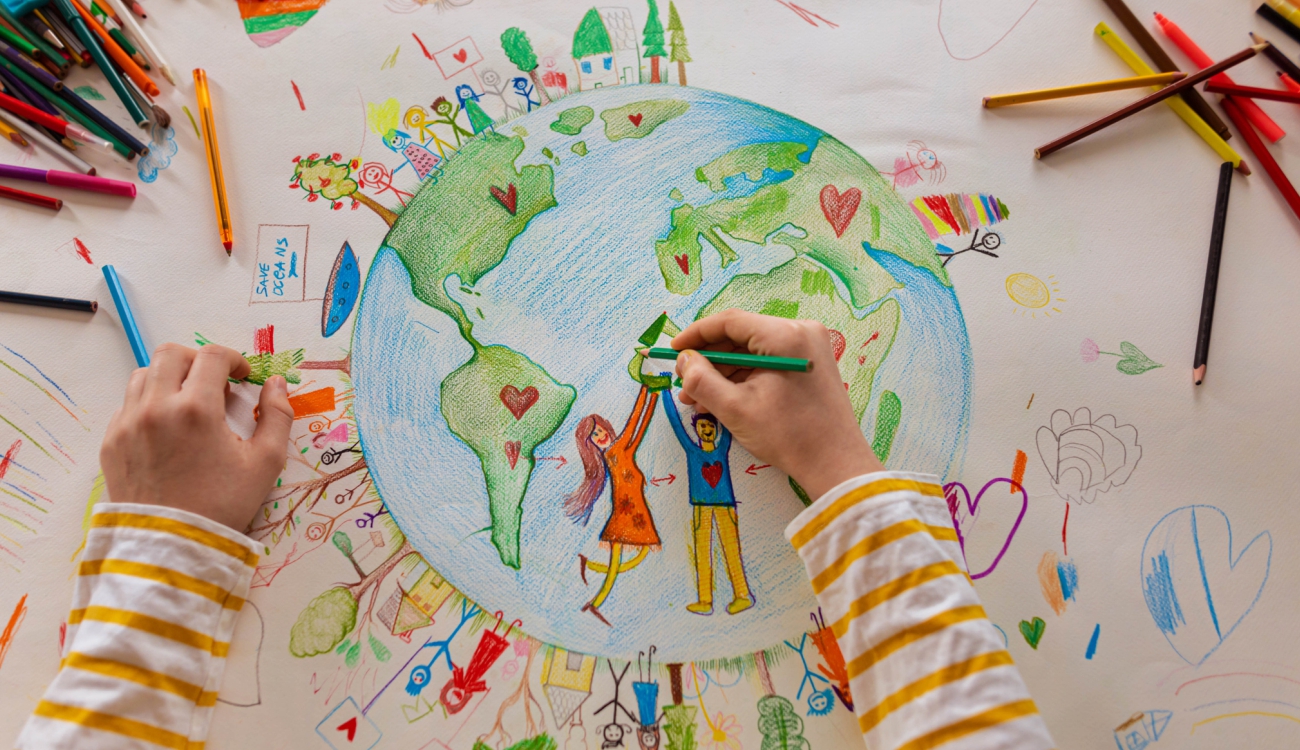
Embedding climate awareness into curricula so that students can grow with clarity, empathy, and shared responsibility.
| In this article, you can explore: ✅ Bringing real-world changes into learning ✅ When young voices begin asking bigger questions ✅ When awareness becomes shared responsibility ✅ A subtle shift parents are already noticing ✅ Learning that feels close to real life ✅ Learning through action: Greenfluencer Academy at VIBGYOR ✅ Climate learning that connects across subjects ✅ Global perspectives that expand climate understanding ✅ What students notice before they learn ✅ Turning observations into meaningful action |
Why does summer feel harsher?
Why do our daily choices carry more weight than before?
Why do some places struggle for water?
These are no longer occasional concerns; they are part of daily life. Students notice them, even when they don’t fully articulate them. Schools have an opportunity to respond by making learning reflect what students are already experiencing.
With stronger environmental education in schools, students begin to understand these realities in context. The growing student environmental awareness helps them recognise patterns, ask questions, and carry those insights into everyday decisions.
Bringing real-world changes into learning
India witnessed extreme temperatures in 2024, with over 37 cities crossing 45°C. In fact, schools in several states announced early summer breaks or revised class timings due to severe heatwaves. Conversations around water shortage in Bengaluru and floods in Assam continue to surface across households.
Students witness all of this, yet often lack the tools to interpret it.
Integrating climate action in school curricula connects classroom learning with lived experiences. It allows students to make sense of what they see, combining theory with reality in a way that feels immediate and relevant.
When young voices begin asking bigger questions
There is a noticeable shift in how young people speak today, and their questions carry intent. Ridhima Pandey, at nine years old, approached the courts to question climate inaction. At seven years of age, Licypriya Kangujam stood outside Parliament calling for climate education. These moments hold a deeper awareness among students today.
These instances point to something important: a growing number of young people are stepping forward, asking questions, demanding answers, and expecting change.
For parents and educators, this signals the need for learning that keeps pace with this awareness.
“Hope is telling the truth. Hope is taking action. And hope always comes from the people.” – Greta Thunberg
When awareness becomes shared responsibility
Across India, there has been a visible push towards climate conversations through various campaigns.
| The LiFE (Lifestyle for Environment) movement introduced by the Government of India in 2021 encourages individuals and institutions to move from “mindless consumption” to “deliberate utilisation” of resources. |
| The National Action Plan on Climate Change (NAPCC) outlines India’s broader strategy to address climate challenges, with missions focused on solar energy, water, and sustainable habitats. |
| The National Adaptation Fund for Climate Change (NAFCC) supports projects that help communities respond to climate impacts, making climate resilience a shared responsibility. |
These policies are part of the world students already live in. When schools bring these ideas into learning, sustainability shifts from a distant concept to an everyday practice.
A subtle shift parents are already noticing
Something has changed in how children think. Students question water use, they notice waste, and they pause before switching something on or off. Although seemingly small, these shifts signal something deeper.
The National Education Policy 2020 places strong emphasis on experiential learning and environmental awareness across subjects, encouraging students to think across subjects and connect ideas.
Aligning with teaching sustainability in classrooms, this learning extends beyond textbooks and becomes a part of the thinking process.
Reflect on these moments
- Your child switches off a fan without being told
- They talk about saving resources
- They question habits at home
Not just isolated actions, these showcase the learning that has stayed with them.
Learning that feels close to real life
Students engage more deeply when learning connects with what they see around them.
Glaciers in the Himalayas are melting fast, affecting river systems. States such as Odisha, Andhra Pradesh, West Bengal, and Tamil Nadu continue to face frequent cyclones, disrupting daily life and livelihoods.
Simple climate action projects for students, such as tracking temperature changes, observing water use, or documenting changes in green spaces, help students connect their observations to understanding.
Community-led mangrove restoration across India’s coastlines has shown how local efforts can strengthen resilience. These real examples often inspire meaningful project ideas for learning, linking classrooms with the world outside.
Learning through action: Greenfluencer Academy
In April 2023, VIBGYOR Group of Schools became the first school in Asia to launch the Greenfluencer Academy, a programme born from a collaboration made possible at the Nobel Prize Teacher Summit in Stockholm.
Founded by Matthew Pye in Brussels, and already active across seven European countries, the Academy brings a new rigour to climate education.
Students are trained not simply to understand the environment, but to think in systems – through climate action projects for students that explore how climate change reshapes economies, cultures, and the way the world feeds itself. On completing the programme, students receive certificates accredited by the European School System.
Climate learning that connects across subjects
Understanding climate change doesn’t stay confined to only one subject. A heatwave affects health, livelihoods, and cities. Air quality defines daily routines. Numbers in a math class – temperature rise or carbon levels, carry stories of real-world change.
As environmentalist David Orr once said, “All education is environmental education. By what is included or excluded, students learn that they are part of or apart from the natural world.”
An evolving environmental studies curriculum helps students clearly view these relationships. It brings together fragmented ideas, allowing them to understand consequences, patterns, and connections in a way that feels real.
Global perspectives that expand climate understanding
Climate conversations look different across countries and regions.
- In Uganda, Vanessa Nakate has drawn attention to how climate change affects vulnerable communities.
- In New Zealand, India Logan-Riley brings attention to traditional Māori knowledge, offering insights into environmental change and its impact on communities.
- In Kenya, Elizabeth Wathuti has led youth-driven efforts through her Green Generation Initiative, which has planted over 30,000 tree seedlings while promoting environmental awareness.
These perspectives show that climate learning cannot remain uniform. It needs context and diversity of thought. This broader view is in tandem with education for sustainable development goals, encouraging students to think beyond borders and understand global interconnections.
What students notice before they learn
It starts outside:
- A longer summer
- Monsoons that arrive later than expected, or not at all
- Seasons that feel unfamiliar
Students notice these shifts early. They feel them and then begin to question them.
This curiosity carries forward into classrooms. Project-based learning on climate change helps students make sense of what they observe, recognise patterns, and deepen their understanding.
Turning observations into meaningful action
Climate learning shows up in routines, conversations, and the small choices students make every day. Consistent reinforcement of these lessons across school and home is what turns awareness into habit.
| For parents | For teachers |
| Speak your choices out loud: “Let’s save this water” | Use real-world examples alongside textbooks |
| Allow children to question habits | Ask students what they notice before explaining |
| Track one resource together: water, electricity, or waste | Turn observations into climate action topics and activities |
| Explain decisions simply and honestly | Encourage students to present, question, and reflect |
Students today are growing up in a world that demands clarity and responsibility. What they experience and understand today influences the choices they make tomorrow. Through climate change education for students and meaningful sustainability education in schools, learning moves beyond information into intent. Aligning across classrooms and homes, this intent strengthens, shaping a generation that thinks with depth, acts with care, and carries a strong sense of responsibility forward.


