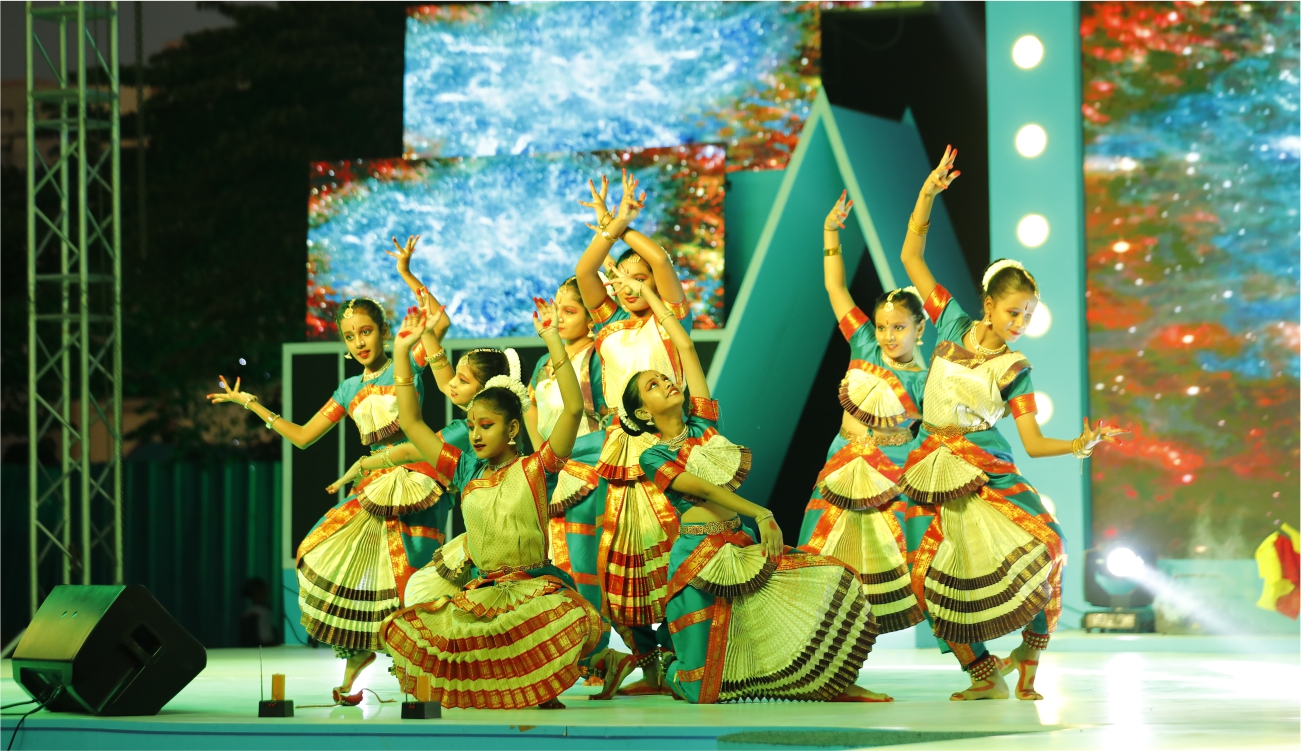
Movement that gives students a powerful way to express feelings that are often difficult to articulate.
| In this article, you can explore: ✅ When the body speaks, expression finds its way ✅ When life moves faster than feelings can ✅ Culture creates identity and shared connection ✅ A stage that brings expression into the open: VIBGYOR Viva ✅ Movement holds attention in ways screens cannot ✅ Physical responses make learning feel more real ✅ Simple ways to bring movement into the classroom |
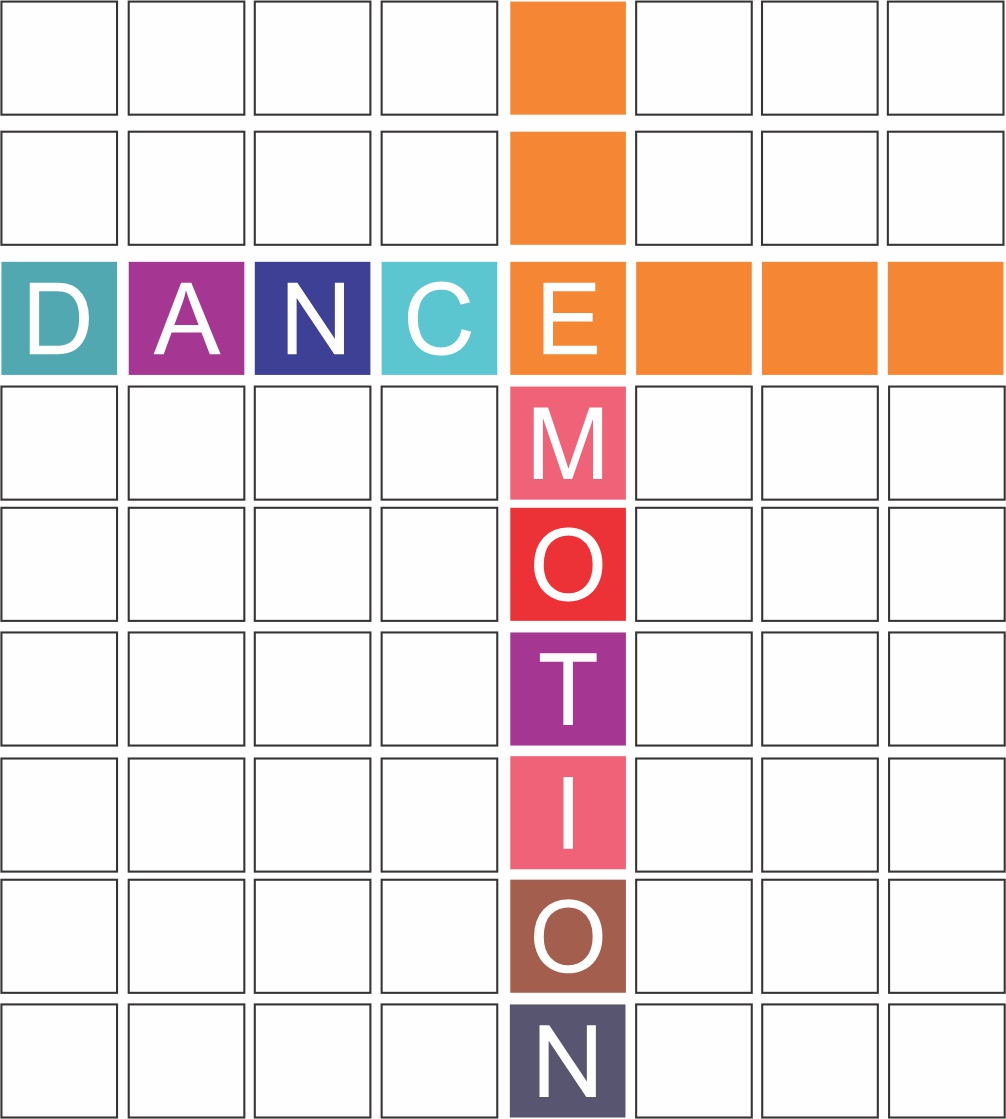
Across: A way to express without speaking (5 letters)
Down: Something you feel but cannot always explain (7 letters)
Answers: DANCE. EMOTION.
Some feelings are difficult to explain, especially for young people. The anxiety before a test, the excitement that feels too big to contain, or the frustration that turns into silence. When these emotions are not spoken about, they still surface.
For many students, that release appears through movement. Even before they can explain what they are feeling, their body reveals it: in how they walk, how they sit, how they respond to the space around them. These signals are present in classrooms every day, often unnoticed.
Dance taps into exactly this. It gives students a real outlet, a space to process and express what they are feeling. Understanding how dance helps students express emotions is at the heart of what makes dance in education so valuable.
When the body speaks, expression finds its way
Rukumini Vijayakumar,a Bharatanatyam dancer and choreographer, has spoken about bringing ballet and contemporary influences into her classical practice – not to replace it, but to deepen its understanding. Each form creates a dance language that is more precise and personal.
Students respond similarly, even without formal training. Before they find the right words, their body language often communicates first. An anxious student may withdraw, while another moves with ease. These shifts carry meaning for those who pay attention.
This is where student self-expression through movement begins. For students who find it difficult to speak up or organise their thoughts, movement becomes a way to respond without the pressure of explanation. It feels instinctive, almost immediate.
Aditi Mangaldas, a renowned Kathak dancer, has described dance as a space where nothing can be hidden. Even the smallest shift carries meaning. Kathak legends like Pandit Birju Maharaj brought this to life through storytelling, as even a glance could hold an entire narrative.
Over time, the focus turns inward. Students begin to recognise their own patterns – what feels natural, what they tend to hold back, what catches them off guard. That awareness becomes a starting point, helping them make sense of what they feel, at their own pace.
When life moves faster than feelings can
This space for expression matters even more today. Academic demands, expectations, and constant digital stimulation leave little room to pause and process emotions.
Dancer and choreographer Pina Bausch once said,
“I’m not interested in how people move, but what moves them.”
Mikhail Baryshnikov, a Latvian-American dancer and choreographer, has described dance as a way of giving form to feelings that resist language. This is precisely where dance and mental health intersect.
Movement lets the body release what the mind has been holding – tension, anxiety, or excitement – without those feelings needing immediate explanation. Even a short movement session can reset the emotional tone of a classroom.
In fact, the 2024 article The Role of Dance Movement Therapy in Enhancing Emotional Regulation in PubMed Central confirms that movement-based practices actively support emotional regulation and psychological well-being.
In India, as conversations around mental health gradually enter schools, dance offers a natural and accessible entry point. It does not demand training or resources. It simply asks students to show up as they are.
Culture creates identity and shared connection
India’s diversity is often discussed but not always experienced directly in classrooms. Dance changes that. Bharatanatyam, Kathak, Bhangra, Garba, and Lavani carry histories, communities, and lived traditions within them. When students engage with these forms, they step into stories rooted in real people and places.
The 2025 Dance as a Cultural Expression article in the Interdisciplinary Cultural and Humanities Review notes that traditional dance forms have played a central role in preserving communities’ cultural heritage worldwide. Cultural awareness through dance gives students a way to connect with identities that textbooks can describe, but only experience can deepen.
For students, this is an education in empathy: one that relies on experience and participation.
A stage that brings expression into the open: VIBGYOR Viva
At VIBGYOR VIVA, an initiative by the VIBGYOR Group of Schools, we give students a platform to bring this expression into a shared space. As one of India’s largest inter-school cultural festivals, it brings together students from different cities to participate in dance, music, theatre, and visual arts.
Dance has a strong presence at this event, making it a meaningful example of student self-expression through movement. Students present classical, contemporary, and fusion pieces, each reflecting a different voice and experience.
What stays with them is the process, from preparing with a team, facing an audience, to seeing their effort acknowledged. These moments support creative movement in education in a way that feels real and memorable.
For many, it becomes the first time their expression is seen and valued beyond the classroom.
Movement holds attention in ways screens cannot
Digital content moves quickly and demands very little from the viewer. One video ends, another begins, and attention shifts before anything fully settles.
Dance interrupts this pattern. It asks students to stay present, observe closely, and participate actively.
This shift from watching to doing builds focus, strengthens memory through repetition, and builds discipline through practice. At the same time, it leaves room for personal interpretation that no algorithm can replicate.
Physical responses make learning feel more real
When students engage through dance, learning becomes more immediate. A story expressed through gesture is not just understood; it is experienced. A concept explored physically is more likely to stay with them.
A 2024 article in PubMed Central notes that both performing and watching dance activate several areas of the brain, showing how deeply it engages the mind. This is what gives creative movement in education its relevance. It strengthens it by making ideas more tangible.
Arts integration in classrooms works on exactly this principle. Once students connect knowledge with physical experience, understanding becomes more personal and lasting.
Simple ways to bring movement into the classroom
Some of the most effective movement activities are also the simplest. They focus on presence, observation, and honest response.
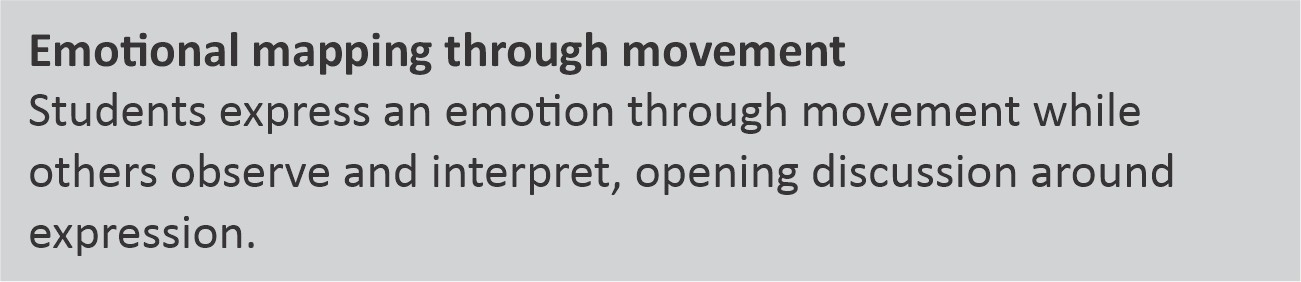




These activities encourage participation without pressure and support social-emotional learning through dance.
Every student carries expression in the body long before it reaches words: the pause in breath, the shift in pace, or the energy that rises and withdraws. These are signals that deserve space, not correction. Classrooms that recognise this foster deeper awareness, stronger connections, and a more honest way of learning. Creative movement in education grounds emotion in experience, offering students a way to process, express, and understand themselves in a world that is moving at a rapid pace.